Identification
Which video tape do I have?
You do not need to know. Every tape is identified at intake, and mixed boxes are welcome. But if you would like to know before you send anything, or you are trying to work out whether that box in the garage is film or tape, this takes about two minutes.
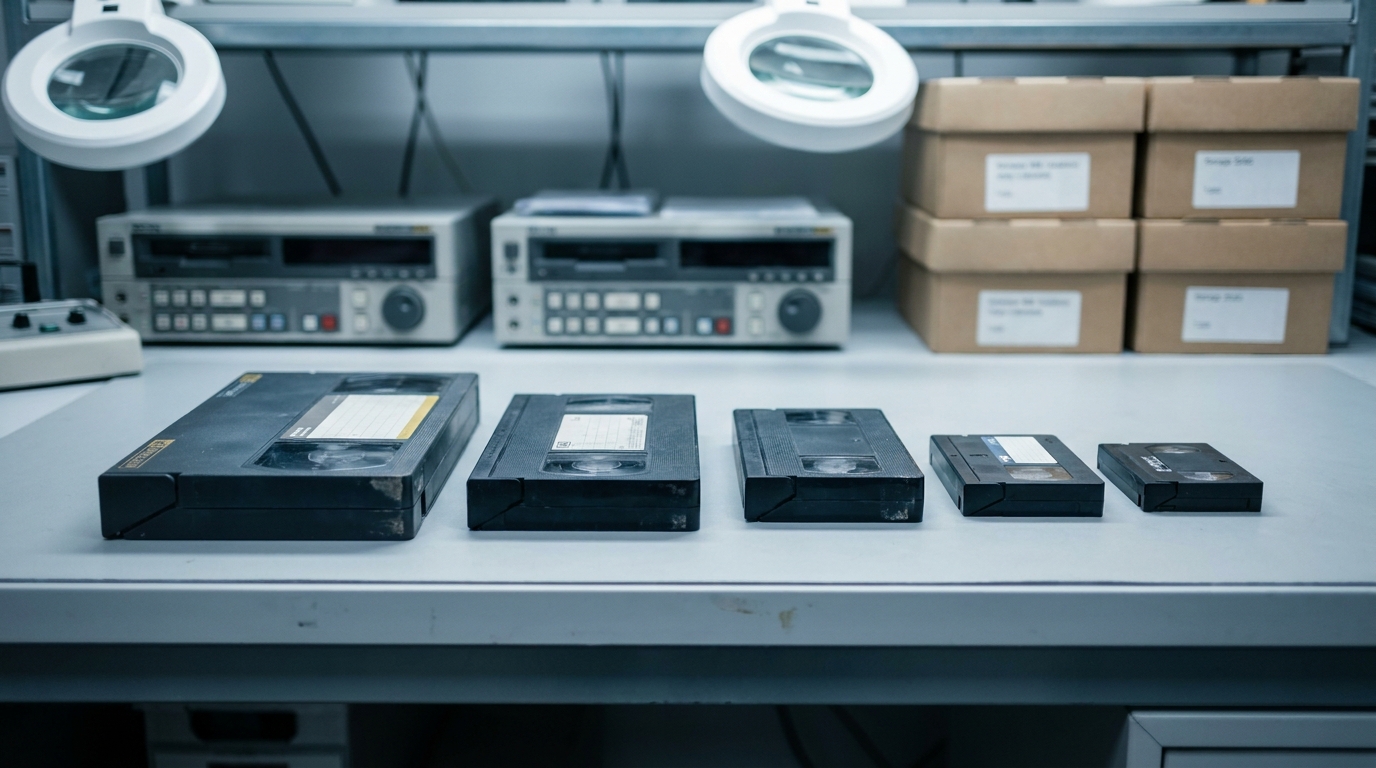
Start with the size of the cassette.
Consumer video tape came in five sizes, and size alone gets you most of the way. From largest to smallest: VHS, Betamax, VHS-C, the 8mm family (Video8, Hi8 and Digital8) and MiniDV. Broadcast Betacam cassettes are larger still and rarely turn up in a family box.
Everything below is a home format we convert on the same per-tape terms, except Betacam, which is priced separately.
| Format | The cassette | Years | How to tell |
|---|---|---|---|
| VHS | Full size, the one from the VCR | Late 1970s to 2000s | Says VHS on the shell. The only format that can hide six hours on one tape. |
| S-VHS | Same shell as VHS | 1987 to 2000s | S-VHS logo on the shell. Recorded a sharper picture. |
| VHS-C | Palm size, needed a VCR adapter | 1980s to 1990s | Says VHS-C. Same tape as VHS in a compact camcorder shell. |
| Betamax | Slightly smaller and squarer than VHS | Late 1970s to 1980s | Says Beta or Betamax. Most people no longer have a player. |
| Video8 | Small, about the size of an audio cassette | 1985 to 1990s | Says Video8 or 8mm. Analog. |
| Hi8 | Same small cassette | Late 1980s to 2000s | Usually says Hi8. Analog, sharper than Video8. We confirm by the recording. |
| Digital8 | Same small cassette | Late 1990s to 2000s | Usually says Digital8. Digital signal on the same style of tape. |
| MiniDV | The smallest, about the size of a matchbox | Mid 1990s to late 2000s | Says MiniDV. Digital. HDV uses the same cassette for high definition. |
| DVCAM | MiniDV size or a larger full-size DV shell | 1996 onward | Professional. Says DVCAM. Faster tape speed than MiniDV. |
| Betacam / SP | Large professional cassette | 1982 onward | Broadcast format, different equipment, priced separately. Not Betamax. |
Years are approximate and describe when each format was in common use for home and professional recording.
Is it film, not tape?
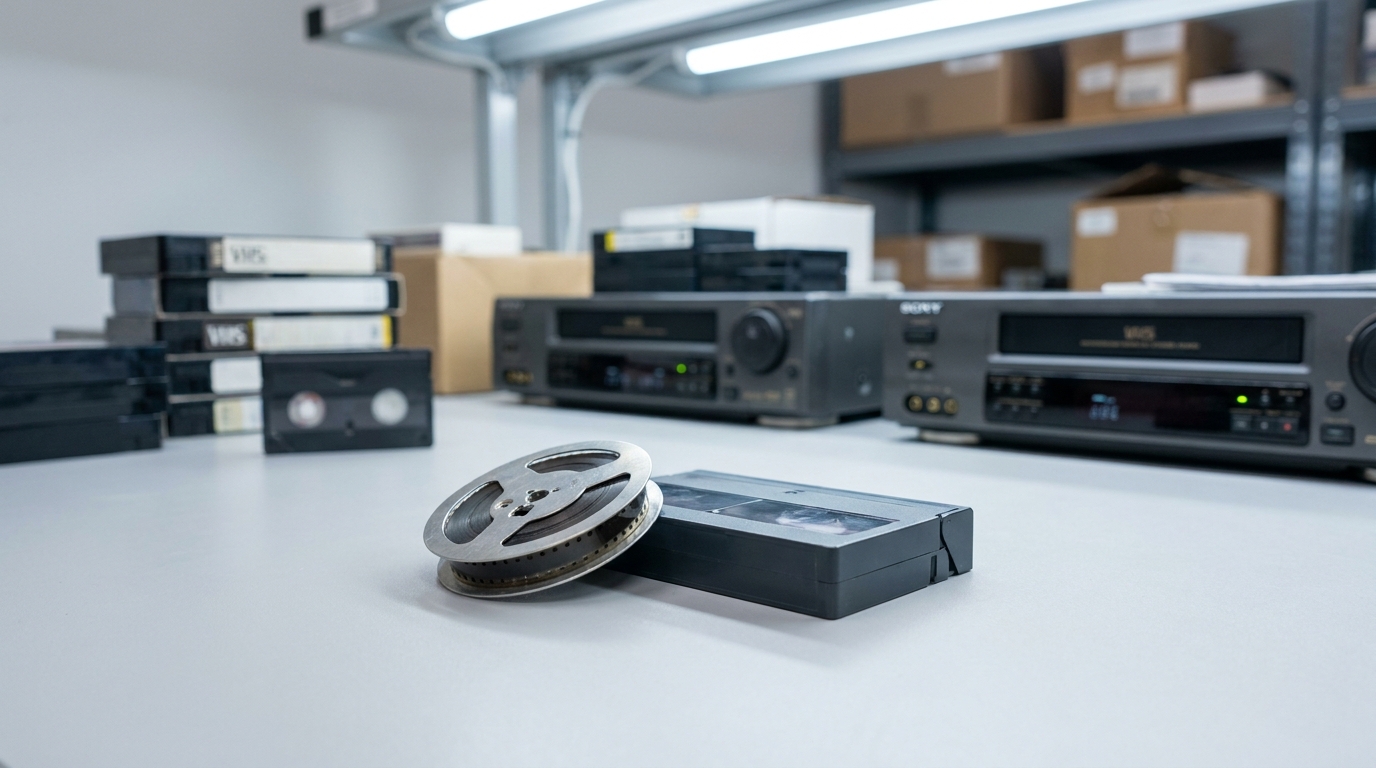
If what you are holding is a reel rather than a cassette, with a strip of film wound around it and a row of tiny holes down one edge, it is movie film, not video tape. It was shot before camcorders existed, it is almost always silent, and it is scanned frame by frame rather than played. That is a job for our sibling sites: digitalfilmtransfer.com for 8mm and Super 8, and 16mmfilmtransfer.com for 16mm.
The confusion is understandable: 8mm film and 8mm video share a name and nothing else. The 8mm video page shows the two side by side.
Where each format goes from here
VHS and VHS-C
The full-size cassette from the VCR, and the palm-size camcorder version that needed an adapter. Same tape, same price, and the one format that can run past two hours.
Hi8
The sharper analog camcorder format of the late 1980s and 1990s. Looks identical to Video8 and Digital8; we tell them apart by the recording.
8mm video: Video8 and Digital8
Small camcorder cassettes about the size of an audio tape. Not 8mm film, which is a reel with sprocket holes and a different job entirely.
MiniDV, HDV and DVCAM
The smallest cassette and the first digital one. Glitches on playback are usually dropouts, which is a deck problem before it is a tape problem.
Betamax and Betacam
The consumer format most people no longer have a player for, and the broadcast format that only looks similar. We keep working decks for both.
Not sure what you have?
You do not need to be. Every tape is identified at intake. If you would like to know first, the identification guide takes two minutes.
Still not sure? Send a photo.
One cassette, or one reel, is enough. We will tell you what it is and what it would involve, with no obligation.